AI Agents vs. Chatbots: Why Your Business Needs Autonomous Growth
Everyone is using Generative AI to write emails or summarize text. It's impressive, but it has a major flaw: it's passive. Discover how AI agents are changing the game with true autonomous automation.
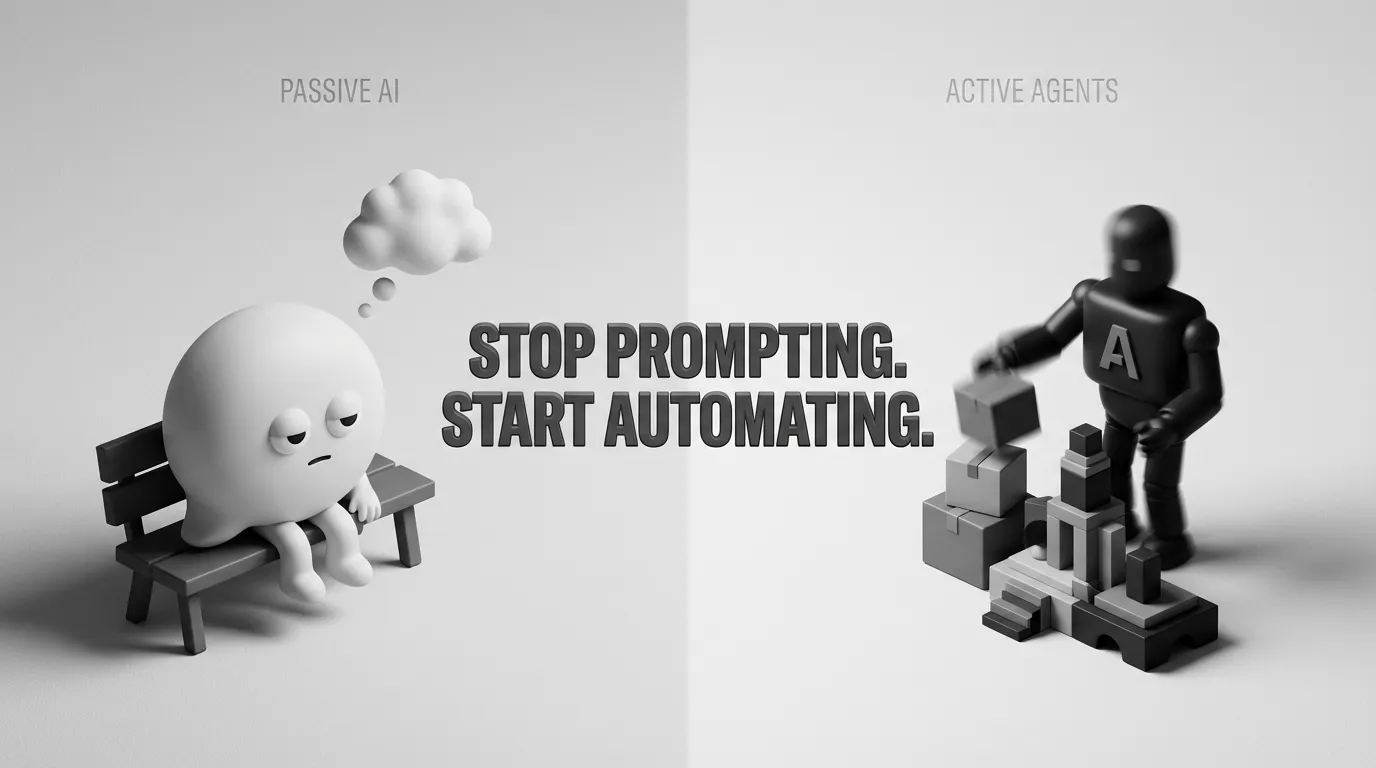
Everyone is using Generative AI like ChatGPT to write emails, summarize documents, or brainstorm ideas. It's impressive technology, but it has a major flaw: it's passive. It sits and waits for you to tell it what to do. If you don't prompt it, nothing happens.
Enter the next phase of AI evolution: AI Agents. This article will explain what an AI agent really is, how it differs from the chatbots you currently use, and why they are the key to true "autonomous growth."
What Exactly is an AI Agent?
An AI agent is a software entity that can perceive its environment, make decisions based on a goal, and take action to achieve that goal—without constant human intervention.
Here's what makes them tick:
- The Goal: You give it an objective (e.g., "Keep my CRM updated").
- The Tools: It has access to your software (email, Slack, Salesforce, etc.).
- The "Brain" (LLM): It uses models like GPT-4 to reason and plan the steps needed to achieve the goal.
The Vital Difference: "Passive AI" vs. "Active Agents"
This is the most important distinction to understand. Think of it this way:
ChatGPT is a brilliant consultant sitting in your office. It knows everything, but it will sit silently until you ask it a specific question.
An AI Agent is a brilliant, proactive employee. You tell them, "Manage incoming customer queries," and they actively monitor the inbox, draft responses, categorize tickets, and only alert you when stuck.
Key takeaway: Chatbots assist; Agents execute.
Why Your Business Needs to Move Towards Agents
1. True 24/7 Operations
Agents don't sleep. They can handle L1 customer support or monitor server logs at 3 AM on a Saturday.
2. Connecting Fragmented Systems
Businesses use too many apps that don't talk to each other. Agents act as the "glue," moving data autonomously between your email, CRM, and project management tools.
3. Speed and Scale
Humans have cognitive limits; agents can handle thousands of repetitive tasks simultaneously without fatigue.
Real-World Examples of Agents in Action
To truly appreciate the power of AI agents, let's examine how they operate across different business functions.
The Customer Service Agent
Instead of just answering FAQs, the agent reads an incoming email, checks the order status in Shopify, processes a refund in Stripe, and replies to the customer confirming the action—all autonomously.
The Sales Development Rep (SDR) Agent
An agent that monitors LinkedIn for prospects matching your criteria, finds their email, verifies it, sends a personalized outreach, and updates the CRM if they reply.
The Future is Autonomous
While chatbots changed how we write, AI agents will change how we work. The future of business is moving from manual workflows to intelligent ecosystems.
Curious if your business processes are ready for autonomous agents? Subscribe to the Otomasi.ai newsletter so you don't miss our next article.